 What's new?
Assortment Optimization Software for Retail Chains
Datawiz assortment optimization software helps retail chains decide which SKUs to keep, delist or review, based on sales and inventory data. It finds slow-moving and unsaleable products, evaluates new SKUs by store and region, and flags inaccurate stock records, so category managers make assortment decisions on data they can trust. Retail chains using Datawiz bring excess inventory down to 15% and improve inventory turnover by 10–15%.
Assortment optimization starts with the right reports

Clear delisting decisions
See which SKUs sell too little to justify their shelf space and stock, by store and across the chain, and decide what to delist with the sales and stock history in front of you.

Better new product launches
Track how each new SKU performs by store and region in its first weeks, so you can expand what works and stop what does not before it ties up stock.

Less capital in slow movers
Find products with sizeable stock and little or no sales, so you can delist, relocate or promote them and free up working capital.

Alignment with evolving customer demand
Reports on real purchasing behavior show what different customer segments buy, helping retailers adapt the product mix and stay relevant across regions or formats.

Balanced product mix across locations
Reports that break down performance by store type, region, or format allow retailers to adapt the assortment to local demand without overcomplicating operations.

Stock data you can trust
Spot products sold while their recorded stock was zero and items that need a recount, so assortment decisions rest on accurate stock records.
Retail data analytics in action: selected report examples
New SKU Report
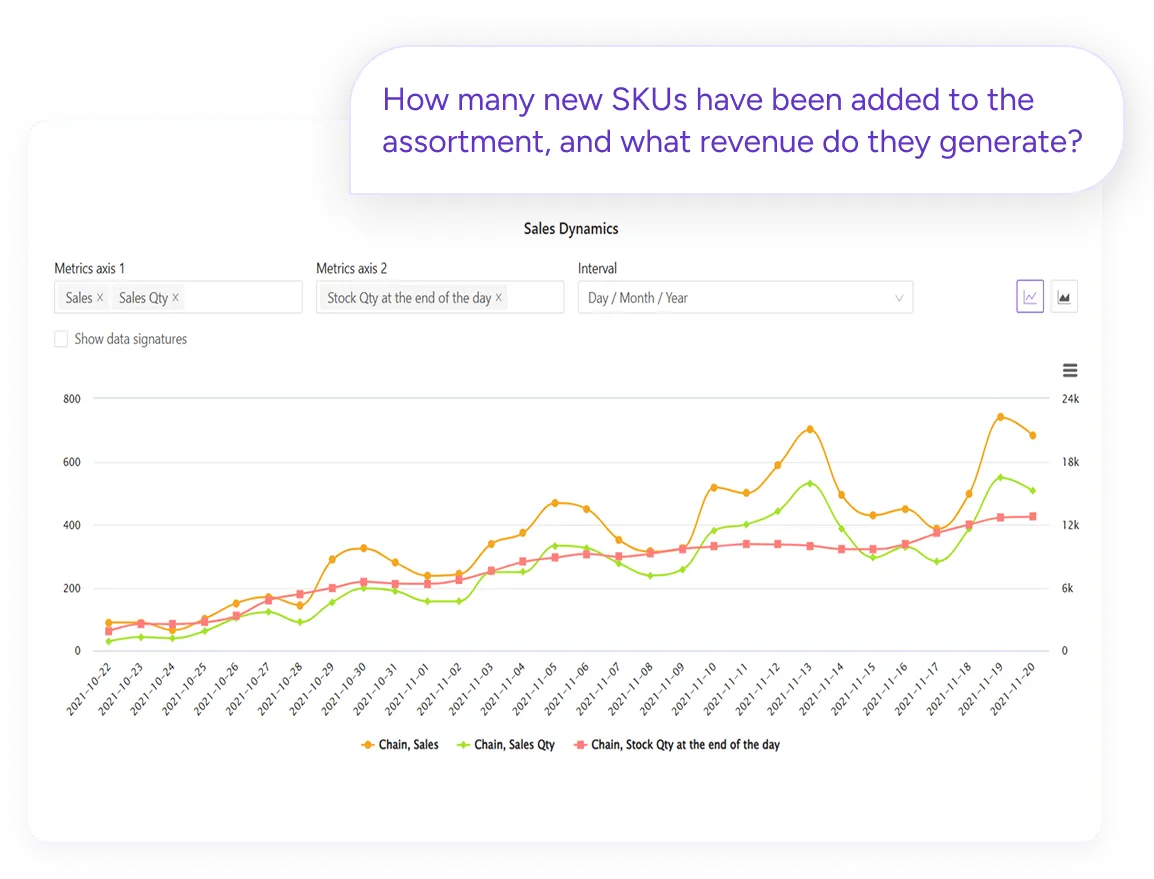
This report provides a comprehensive summary of sales performance for newly introduced products across the retail chain. It helps evaluate the success of new items and informs decisions on their continued inclusion in the assortment.
Key capabilities:
- Analyze sales volume of new SKUs across different levels: regions, districts, and individual stores
- Monitor the total number of new SKUs introduced and the revenue they generate
- Track key sales metrics for new products, including turnover and average transaction value
- Filter data by region, district, or store to identify where new SKUs perform best
Stock Monitoring Report
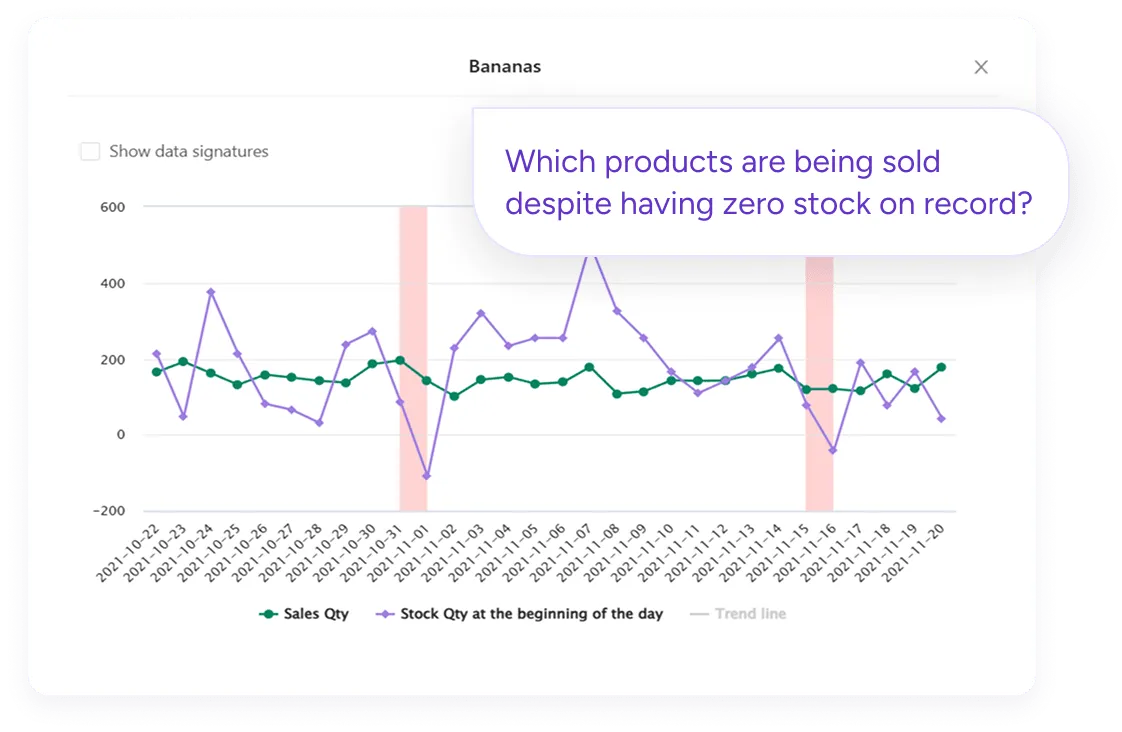
The Stock Monitoring report identifies discrepancies between sales activity and inventory records by highlighting products that were sold despite having zero recorded stock. It helps retailers detect data inconsistencies and prevent inventory-related losses.
Key capabilities:
- Detect products with inaccurate or missing stock data
- Pinpoint when and where potential inventory errors occurred
- Track sales and stock level trends for problematic SKUs over time
- Analyze discrepancies both at the individual store level and across the entire retail chain
Unsaleable products report
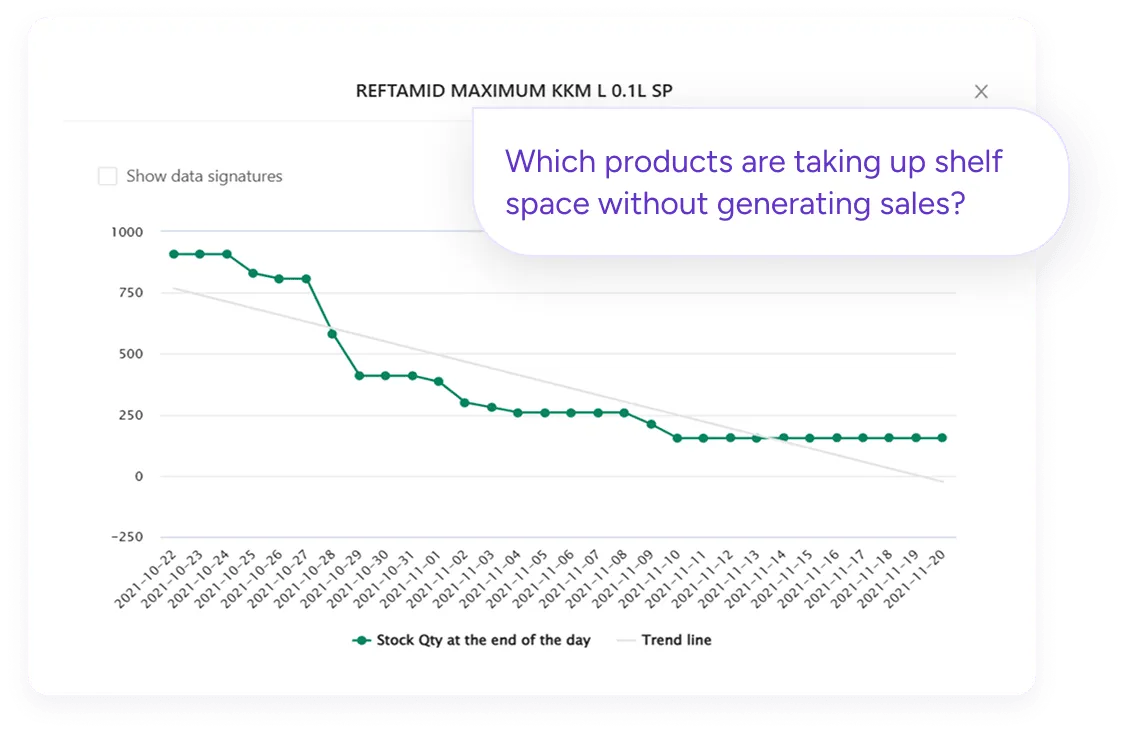
The Unsaleable Products report highlights items that remain in stock but show little to no sales activity over a selected period. It helps category managers identify low-performing products and make informed delisting decisions, a core step in SKU rationalization.
Key capabilities:
- Identify products with high stock levels and minimal or zero sales
- Detect items with consistently low demand across stores or regions
- Evaluate which products should be removed from the assortment
- Monitor sales and stock trends over time to support delisting decisions
 14 days trial period
 no card required
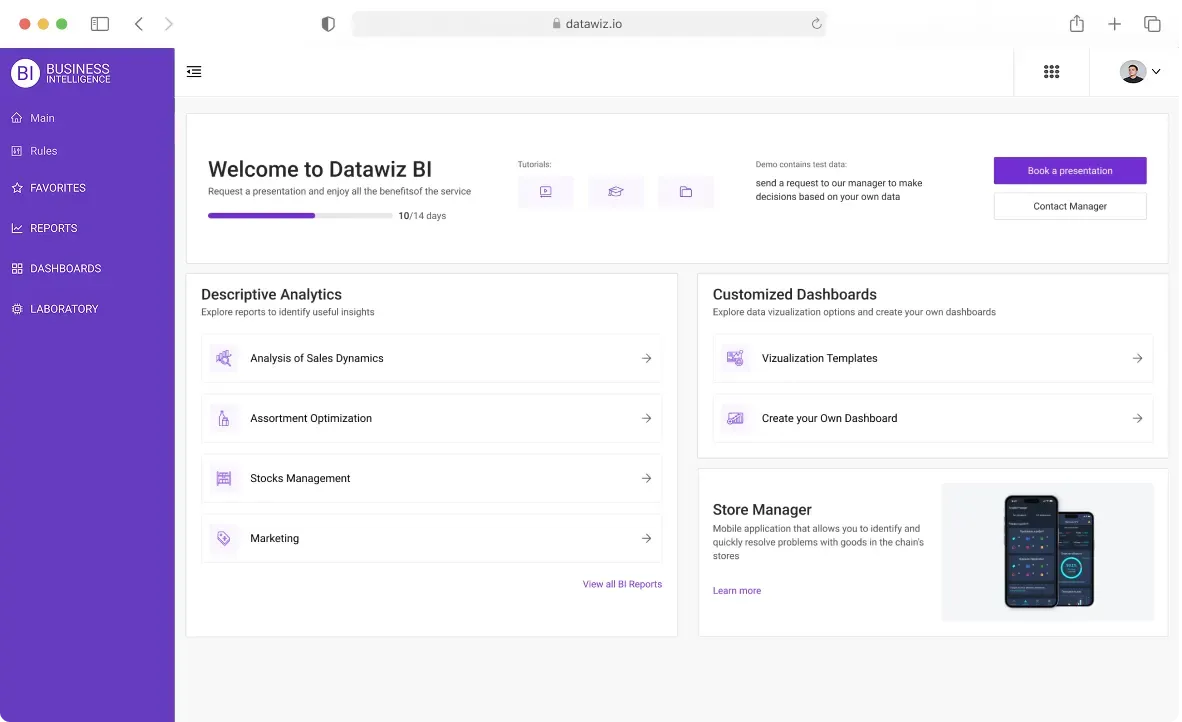
Ready to try a free Datawiz BI demo?
With our demo version, you have the opportunity to dive deep into all aspects of Business Intelligence and experience the full power of our service.
Assortment Optimization Challenges Solved with Datawiz Reports
 Unsaleable Products
 Stock Recount
 New SKU
 Stock Monitoring
 Products Movement
- Solved with:
Unsaleable Products Report
Unsaleable Products Report identifies items with minimal or no sales across stores. This allows managers to make data-driven delisting decisions and optimize product assortment based on actual performance.
- Solved with:
Stock Recount Report
Stock Recount Report highlights inconsistencies between reported stock and transactional data. This enables targeted recounts to improve inventory accuracy and maintain the reliability of analytics.
- Solved with:
New SKU Report
New SKU Report monitors sales and stock levels for each newly added item. This supports timely evaluation of product launches and informed decisions on expansion or withdrawal.
- Solved with:
Stock Monitoring Report
The Stock Monitoring report highlights products sold while their recorded stock was zero, so teams can correct stock data before it distorts assortment and ordering decisions.
- Solved with:
Products Movement report
The Products Movement report traces every stock document by SKU: receipts, transfers between stores, write-offs and orders. Category and supply teams see where stock went and can check whether rebalancing between stores is working.
From Data to Assortment Decisions

Analyze the assortment
Find unsaleable and slow-moving SKUs, compare new products by store and region, and check product contribution withABC/XYZ.

Decide what to change
Mark SKUs to keep, delist, test or move between stores, based on sales, stock and turnover by store and region.

Track the result
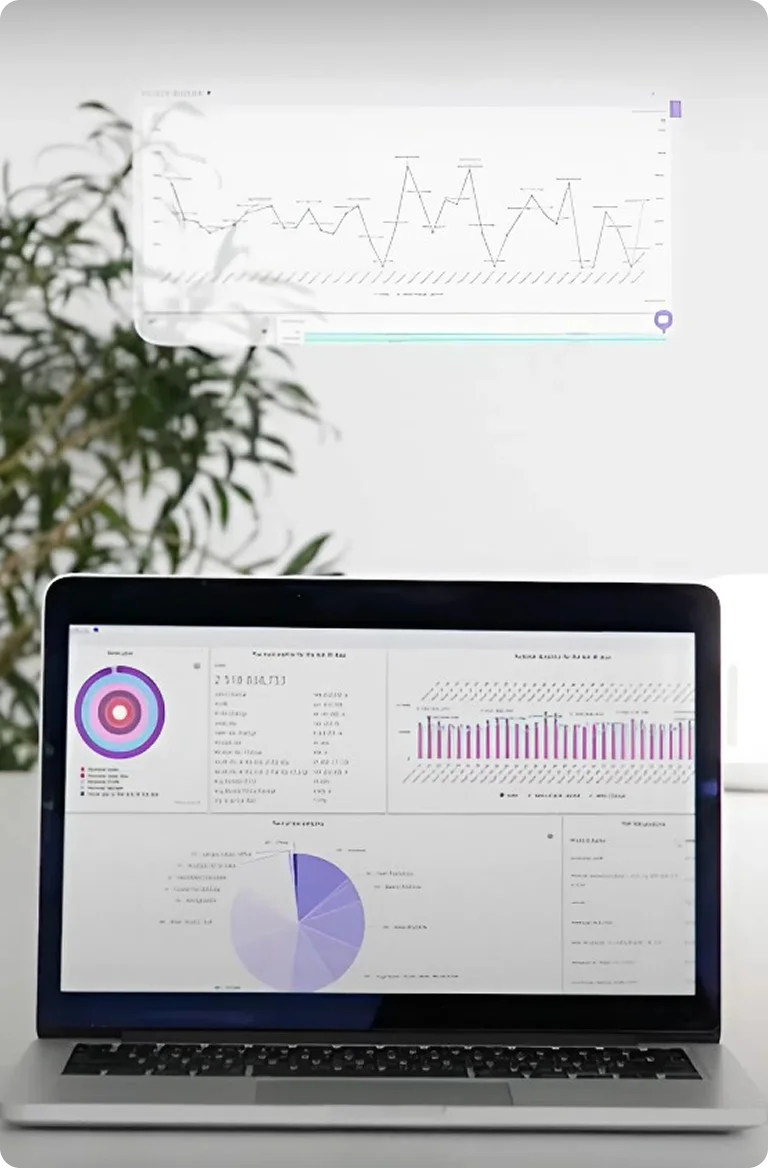
Check how new and remaining SKUs perform after the change and whether excess stock goes down.

Decisions stay with your team
Datawiz gives category managers the sales and inventory analytics behind assortment decisions, rather than automated demand forecasting or replenishment.
FAQ
Inventory and sales reports give category managers ready-to-use insights instead of raw data. The reports reduce manual analysis of stock levels, supplier performance and turnover rates, so managers can focus on assortment decisions that directly affect profitability and customer satisfaction.
Yes. Reports can be filtered by store type, region, or even down to individual SKUs. This flexibility helps retailers adapt the product mix to evolving customer demand, balance inventory across locations, and minimize both stock outs and overstock without overcomplicating daily operations.
Tracking sales trends, stock levels and supplier reliability helps teams spot gaps before shelves go empty. In Datawiz, the Prediction of OOS report flags core products that will run out soon, and the Lost Sales report shows what stockouts cost. Learn more aboutout-of-stock analytics.
Category managers – to optimize assortment, monitor SKU performance, and improve turnover.
Supply chain teams – to detect disruptions, manage stock imbalances, and ensure accurate replenishment.
Store managers – to track store-level performance, reduce inventory discrepancies, and align with local customer demand.
Executives and owners – to gain a clear overview of sales, profitability, and supplier reliability across the retail chain for better strategic decisions.
It depends on how much of the process you want automated. Large chains that need demand forecasting, automated replenishment and optimization models usually look at enterprise planning suites. Chains that want data-driven assortment decisions can use assortment analytics: Datawiz shows which SKUs to keep, delist or review, evaluates new products by store and region, and connects assortment changes to planograms through PlanoHero. Implementation usually takes from a few weeks to about two months, and Datawiz BI offers a 14-day free trial.
Look for products with sizeable stock but little or no sales over a chosen period, and check whether the pattern holds across stores or only in some locations. In Datawiz, the Unsaleable Products report lists these items with their sales and stock dynamics, so category managers can decide whether to delist, relocate or promote them.
No. Datawiz does not place orders automatically. It gives teams the data behind replenishment and assortment decisions: which products are selling, which are about to run out, which are overstocked and how stock moves between stores. Many chains use these reports to build their own orders or alongside a dedicated replenishment system.

 No credit card required