 What's new?
Retail KPI Reports: Track Performance Across Stores
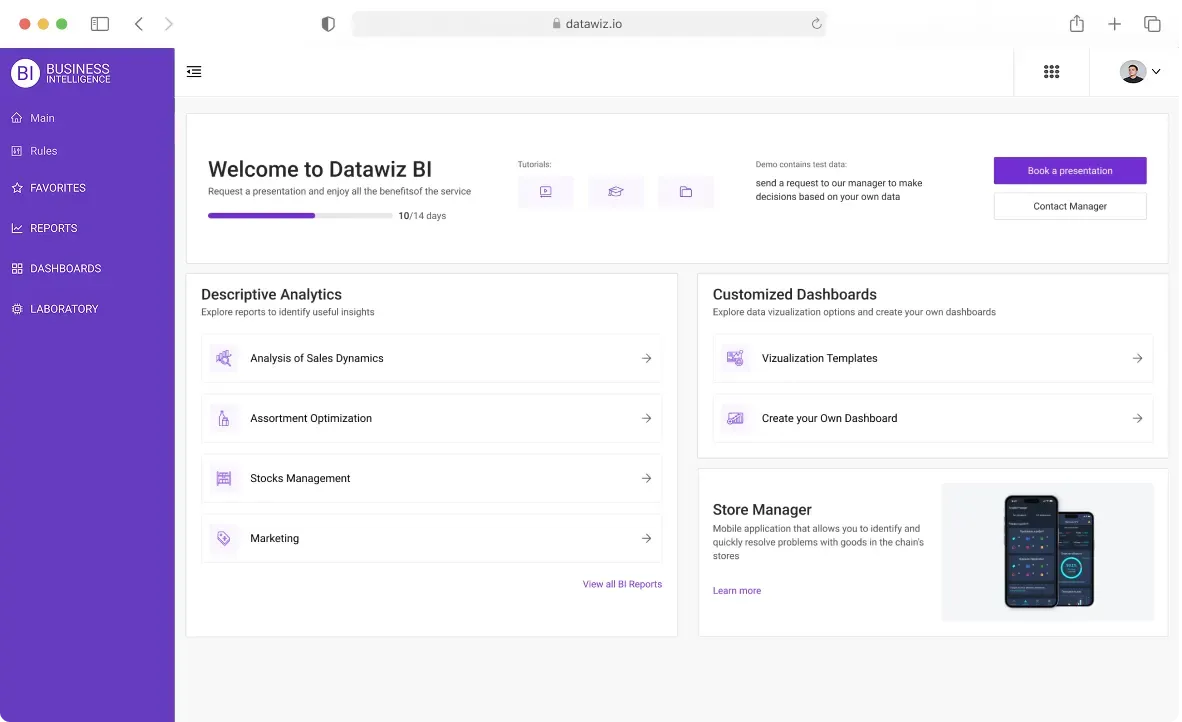
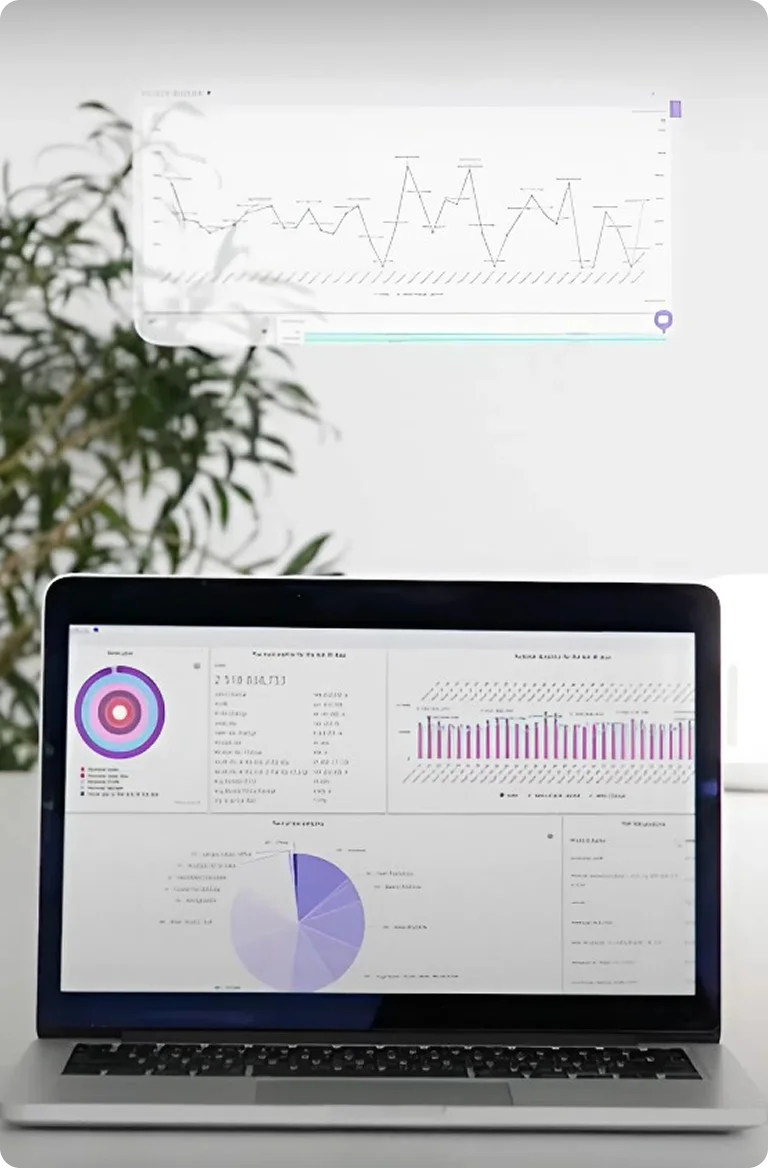
Datawiz gives retail chains ready-made KPI reports for every level of the business: chain, region, store, category manager and cashier. Managers can track sales plans against actual results, compare stores and managers, and drill down from chain totals to individual SKUs, each seeing only the stores they are responsible for.
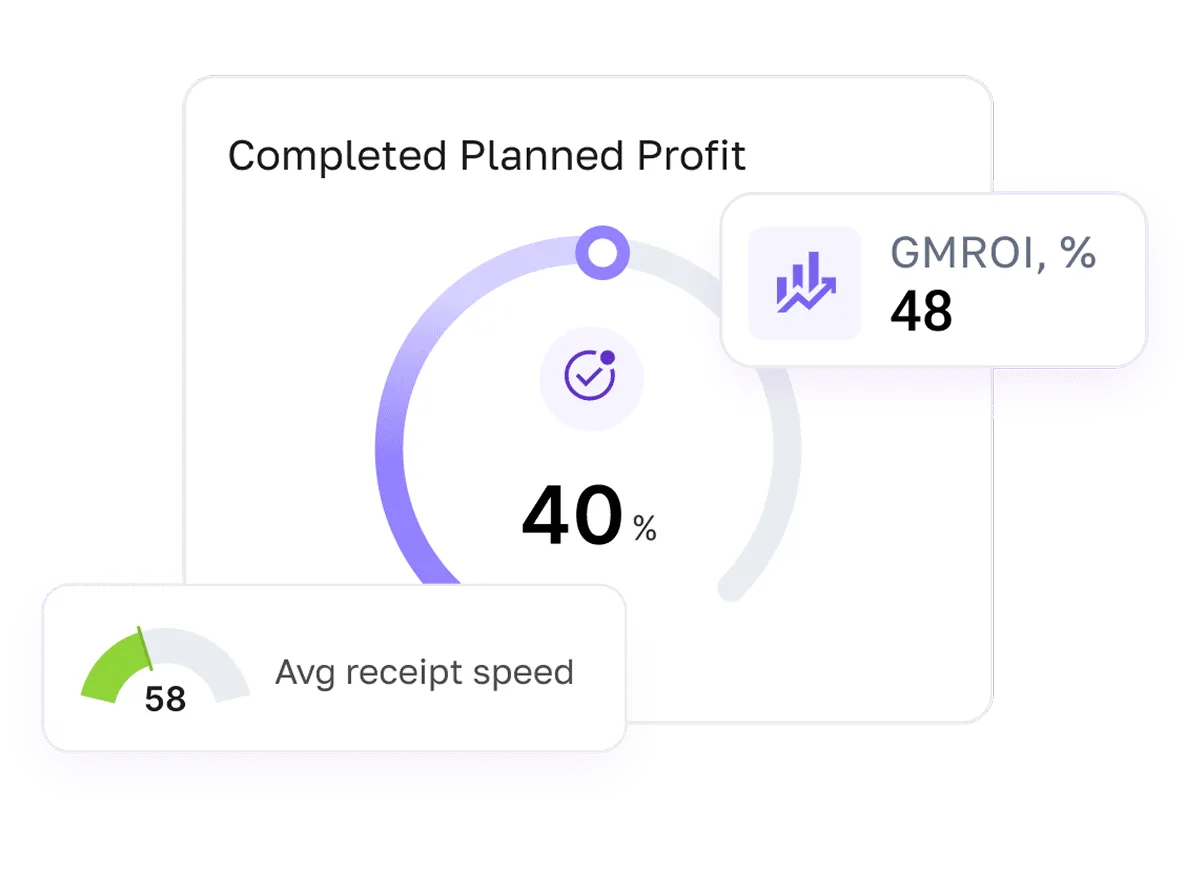
Retail Metrics for Optimizing Staff Efficiency and Productivity

Clear visibility into performance
KPI reporting provides a transparent view of sales, margins, inventory, and customer behavior. Instead of scattered data, KPI reports highlight what truly drives retail performance.

Early detection of risks and inefficiencies
With key performance indicator reporting, retailers can spot falling sales or receipt counts, overstocks and underperforming categories before these issues have a greater impact on business performance.

Focus on business-critical metrics
Rather than drowning in endless numbers, KPI analytics ensures attention stays on the most important KPIs that directly influence profit, customer retention, and operational efficiency.

Boosting staff productivity
KPI reports give managers a clear picture of employee efficiency, task execution, and customer service levels — helping teams stay motivated and results-driven.

Quick demonstration of success
With a centralized KPI reporting system, retailers can immediately see which staff members have the highest performance indicators and which days and hours are the most productive.

Effortless reporting and progress tracking
With all data in one place, it is easy to generate KPI reports, share updates with stakeholders and track improvement over time, with data refreshed daily or as often as you need.
Retail Metrics: KPI Reports to Measure Growth and Efficiency
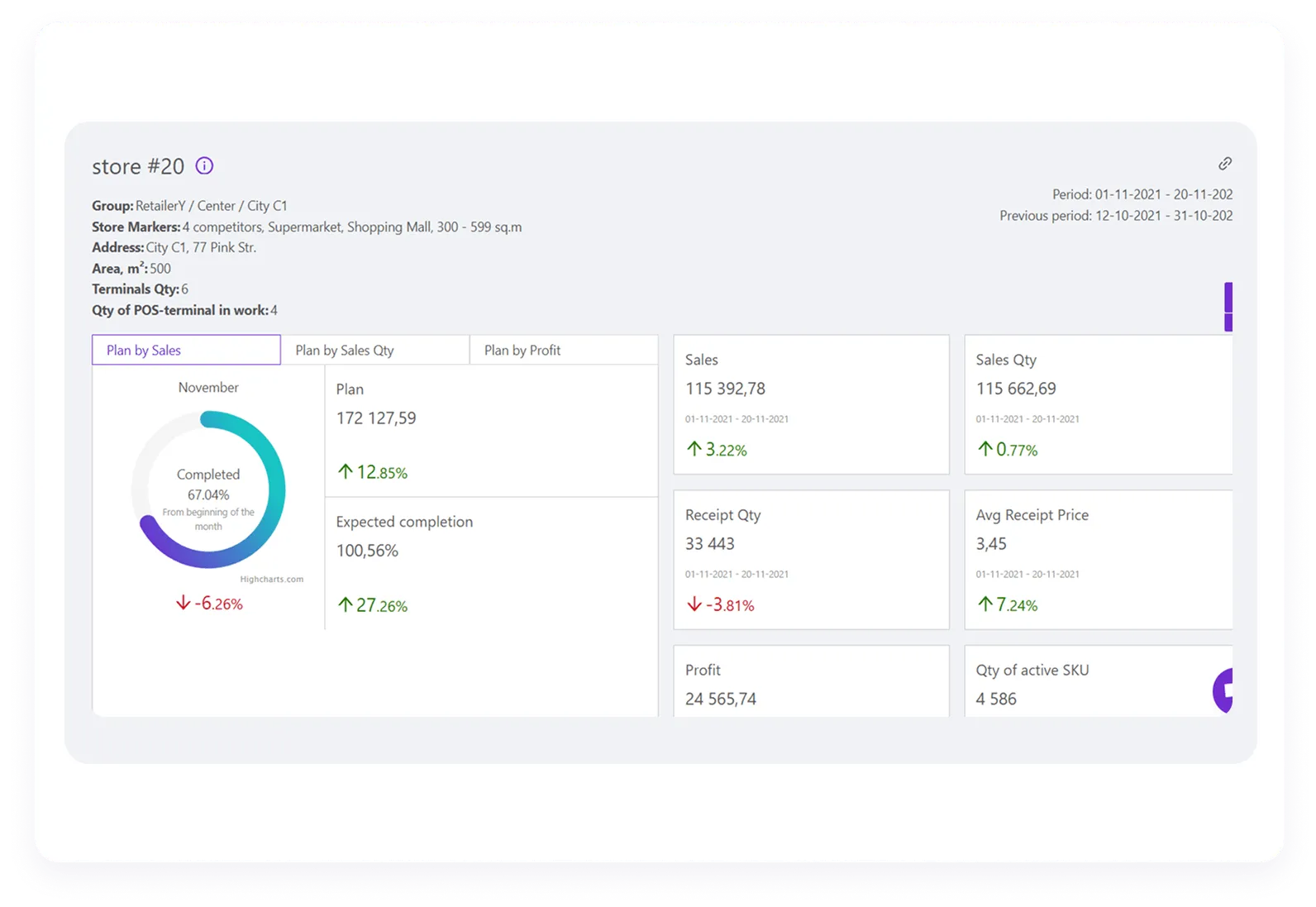
Sales Plans Report
This report tracks KPI in retail by stores, categories, and category managers, showing planned versus actual performance. It helps retailers assess execution, spot gaps, and align teams to achieve sales targets and improve retail store metrics.
Key advantages:
- Performance tracking across levels – monitor plans for stores, categories, and category managers, linking KPI retail to real results.
- Drill-down analysis – move from high-level metrics to SKU-level detail for precise insights.
- Ranking and benchmarking – compare execution across stores, categories, or managers to identify leaders and laggards.
- Actionable insights for improvement – detect underperformance early and adjust strategies to meet sales plans and optimize retail metrics.
Category Managers Report
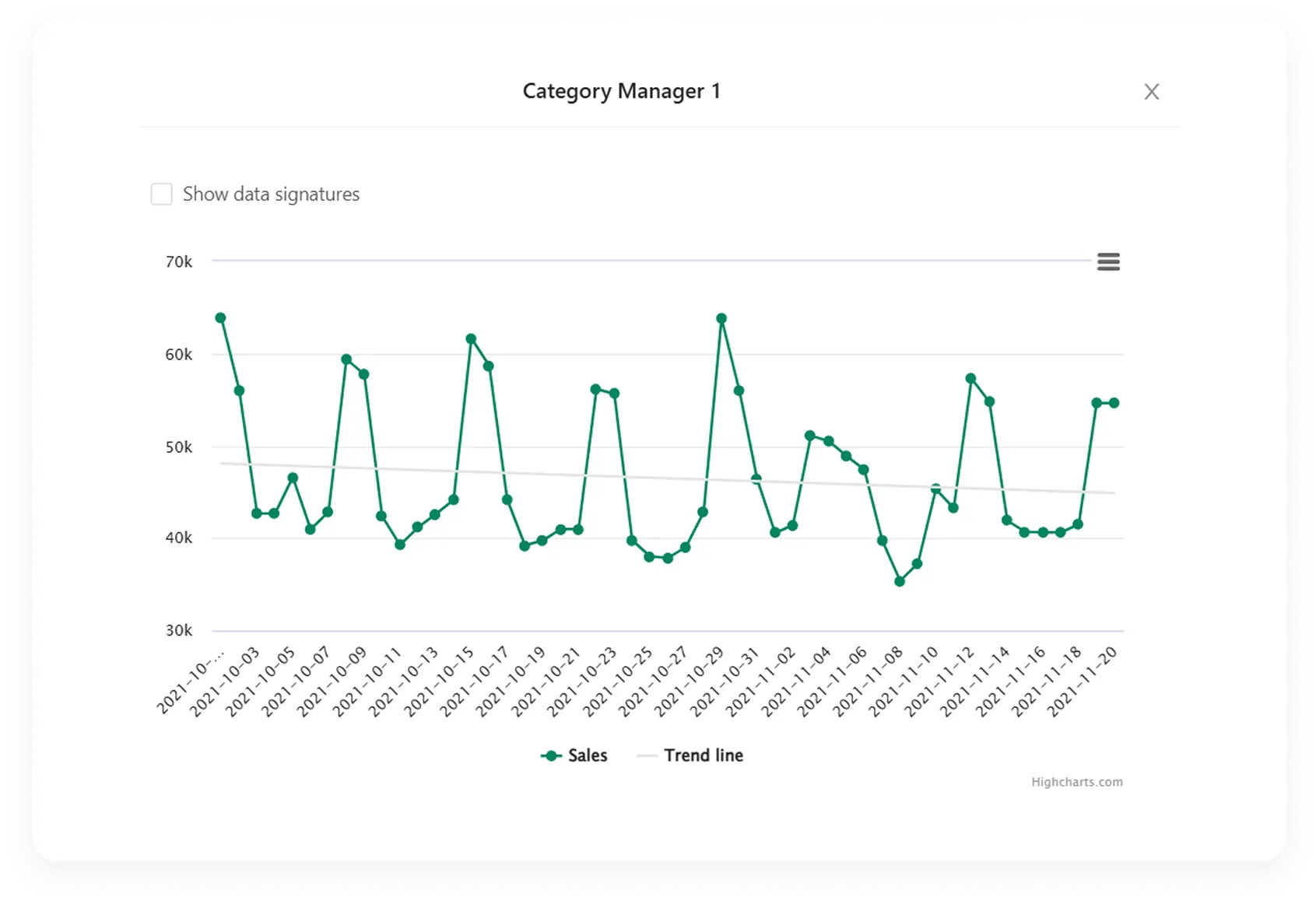
This report evaluates retail KPIs of each category manager, showing how their decisions impact sales, assortment, and profitability. It helps retailers compare performance across periods, spot growth opportunities, and ensure accountability at every level of management.
Key advantages:
- Transparent performance tracking – monitor core KPI in retail and compare current vs. previous periods for clear visibility.
- Drill-down analytics – analyze results from manager to category and SKU, linking retail metrics to concrete outcomes.
- Contribution analysis – assess each manager’s role in overall retail KPIs, from turnover to profitability.
- Actionable insights – detect gaps in assortment or pricing strategy, enabling faster, data-driven decisions that improve retail store metrics.
Effectiveness of Cashiers Report
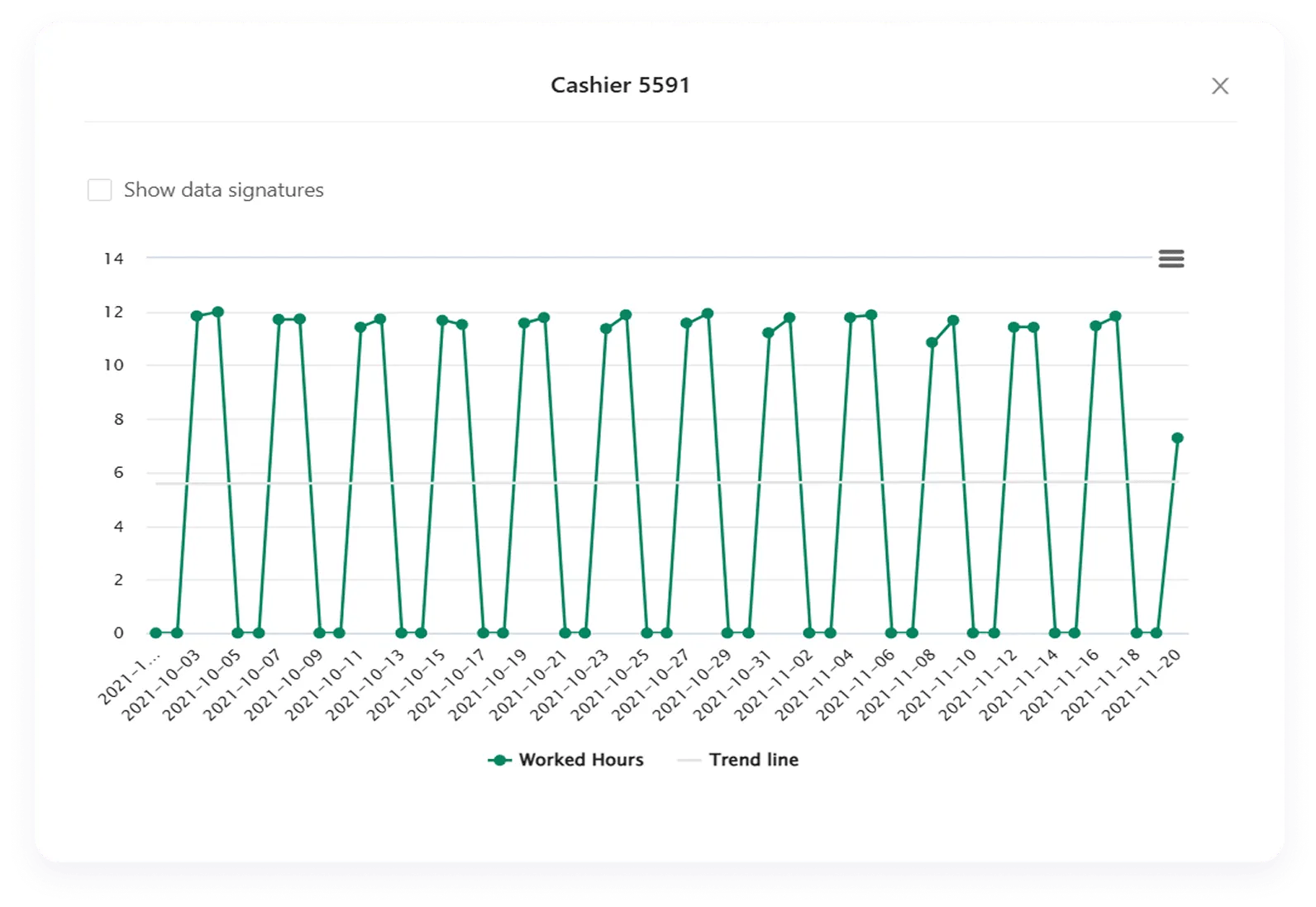
This report tracks KPI in retail for every cashier, revealing productivity patterns, problem areas, and opportunities to optimize schedules. Retailers can quickly identify top performers, address inefficiencies, and improve overall store metrics and service quality.
Key advantages:
- Individual KPI analysis – monitor each cashier’s performance against retail metrics to ensure consistent results.
- Problem area detection – highlight underperforming employees and processes for targeted improvements.
- Optimized workforce planning – use data to adjust shifts and terminal assignments, maximizing efficiency.
- Actionable insights for staff – enable timely coaching and interventions, improving both sales and customer satisfaction across stores.
 14 days trial period
 no card required
Ready to try a free Datawiz BI demo?
With our demo version, you have the opportunity to dive deep into all aspects of Business Intelligence and experience the full power of our service.
Retail KPI Challenges Solved with Datawiz Reports
 Sales Plans
 Cashier efficiency
 Manager KPI Tracking
 Store KPIs on mobile
- Solved with:
The Sales Plans Report
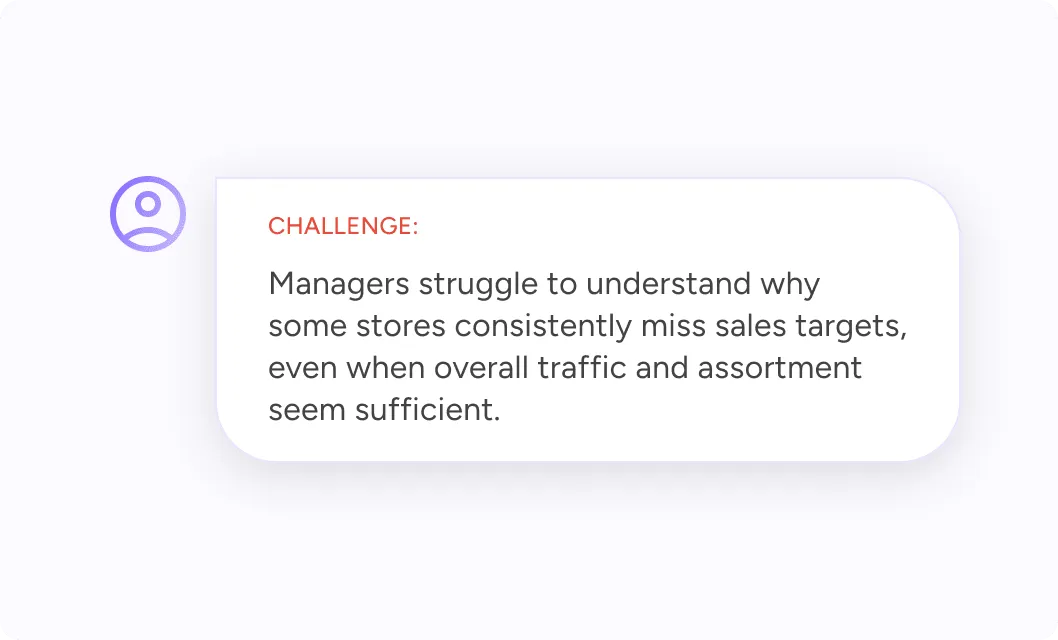
The Sales Plans Report breaks down planned vs. actual metrics by store, category, and category manager. Retailers can pinpoint gaps, evaluate execution, and take precise actions to align teams and improve performance.
- Solved with:
The Effectiveness of Cashiers Report
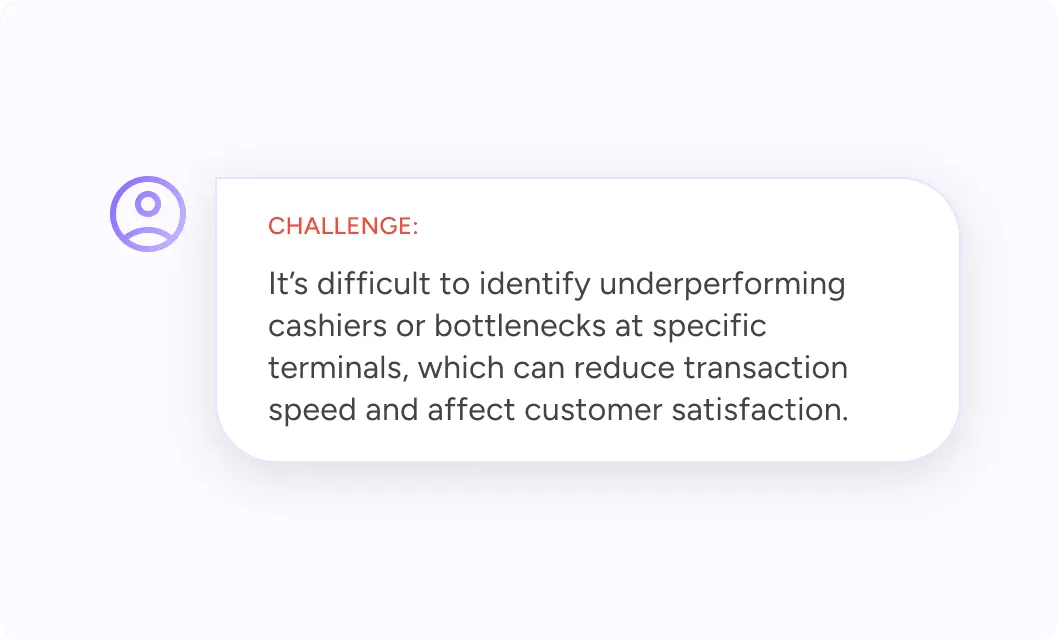
The Effectiveness of Cashiers Report tracks KPI in retail at the individual and terminal level, highlighting low productivity, enabling schedule optimization, and guiding targeted coaching to improve both efficiency and service quality.
- Solved with:
The Category Managers Report
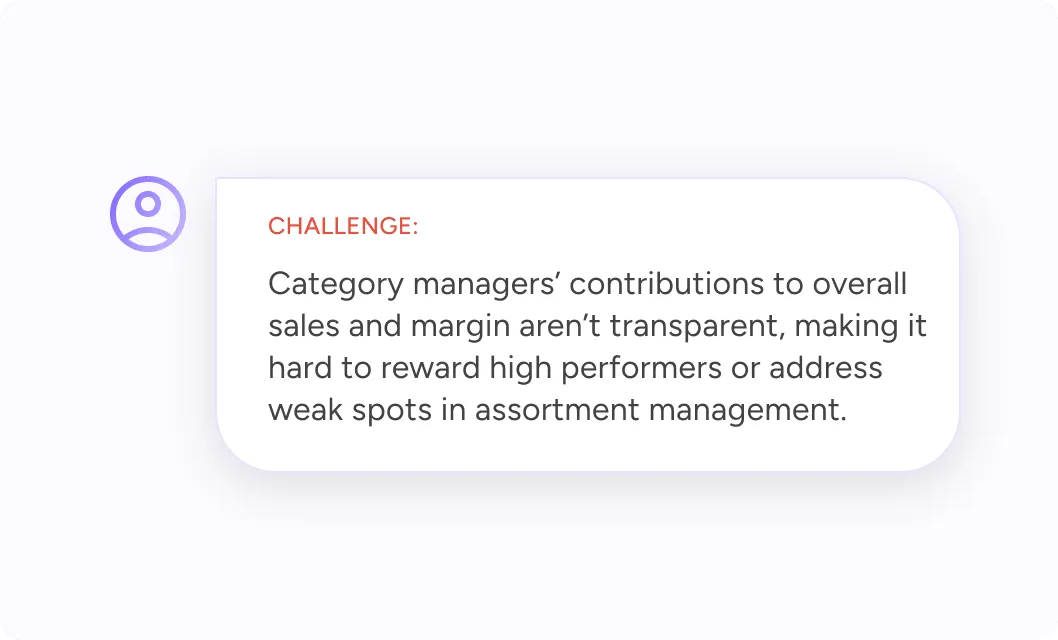
The Category Managers Report visually tracks KPI retail for each manager, allowing drill-down from categories to SKUs. This provides actionable insights to optimize product mix, pricing, and individual accountability across the chain.
- Solved with:
Store Manager app
Store managers track their own store's KPIs on a phone: sales against plan, problem products and daily tasks, without opening a desktop report. Store Manager is a separate mobile app in the Datawiz platform that works together with Datawiz BI.
Retail KPIs by Level of Responsibility

Chain and executives
Revenue, gross margin, same-store sales, sales against plan and inventory turnover across the whole chain.

Store and region
Sales against plan, receipts, average receipt, stock availability and store ranking for each location.

Category managers
Category sales and margin, plan execution and assortment gaps, down to SKU level.

Cashiers and terminals
Sales, receipts, profit, worked hours and checkout speed per cashier and terminal
FAQ
The most important KPI in retail include sales and sales against plan per store, same-store sales growth, average receipt, category and SKU performance, gross margin, inventory turnover and cashier performance. Tracking these retail metrics helps businesses spot trends, evaluate efficiency and make informed decisions that support profitability.
Retail KPIs can be tracked with reports that consolidate sales, inventory and staff performance data. By monitoring retail store metrics with data refreshed daily or as often as you need, and comparing them across periods or locations, managers can detect underperformance, reallocate resources and adjust plans quickly.
Measuring KPI retail for staff provides visibility into individual contributions and highlights areas where additional training or coaching is needed. It ensures that employees are aligned with store goals, encourages accountability, and helps improve overall productivity, customer service, and sales outcomes.
Daily retail metrics can include total sales, number of transactions, cashier productivity, and stock availability. Monitoring these KPI in retail regularly allows managers to quickly detect operational issues, adjust staffing or inventory, and maintain consistent performance across stores.
Analyzing KPI for retail staff allows managers to recognize top performers, identify inefficiencies, and provide targeted coaching. This drives individual productivity, improves customer satisfaction, and ultimately increases sales, turnover, and profitability for the store.
General BI tools work well for chains with analysts who can build their own dashboards. Retail-specific platforms suit chains that want KPIs ready to use. Datawiz BI provides a retail KPI dashboard with sales plans, same-store comparisons, category manager and cashier KPIs, drill-down from chain to SKU and role-based access by store, plus a 14-day free trial.
Store managers need a short list of KPIs for their own store: sales against plan, receipts and average receipt, stock problems and staff performance, visible without waiting for a head-office report. In Datawiz, store managers see these KPIs in Datawiz BI with access limited to their stores, and on mobile through the Store Manager app.
Datawiz can integrate with POS, ERP, WMS, CRM and loyalty systems, including SAP, Oracle, Microsoft Dynamics 365 and LS Central. Data exchange is available through the paid Datawiz Connector, API, SQL databases or CSV files. The Datawiz ETL team can help configure the integration.
Pricing is calculated individually based on the number of stores, SKUs and monthly receipts, with plans typically starting from around $500/month. There is a one-time integration fee and a monthly fee that starts once integration is complete. Datawiz BI can be tested in a 14-day free trial with no credit card.

 No credit card required